Sections
StreamETH: Live Streaming Platform for Devcon
Improved streaming experience for over 60,000+ viewers across the world including North America, Europe and Asia.
Role
Product Designer
Timeline
Summer 2022
Team
Austin (Me)
Engineer
Skills
Figma
Miro
Designing for the biggest Web3 community
During my summer internship at Livepeer, an open video infrastructure company, I partnered with the Ethereum Foundation to design a live streaming platform for Devcon, the biggest web3 conference in the world.
Background
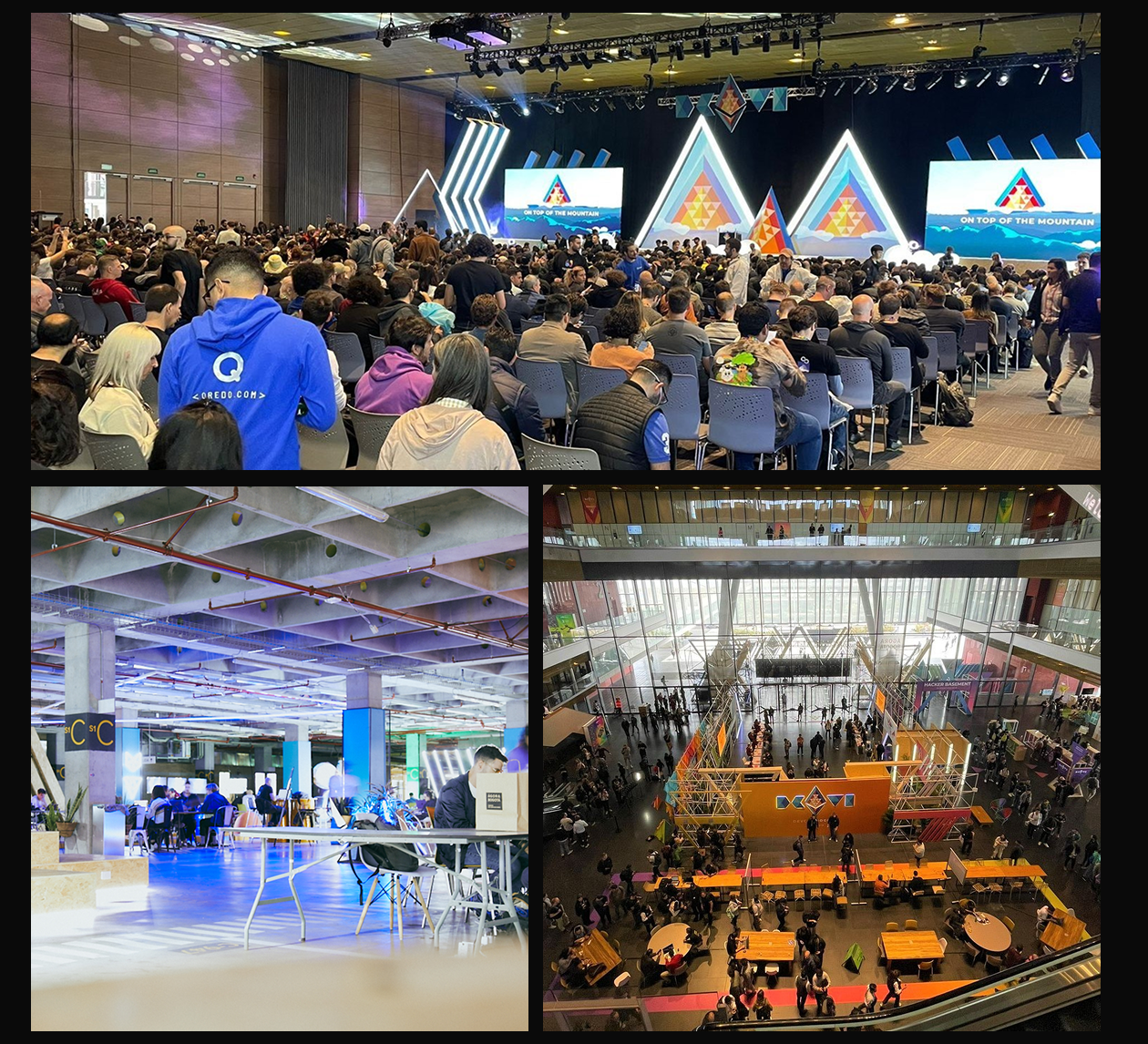
It impossible for everyone to attend Devcon physically.
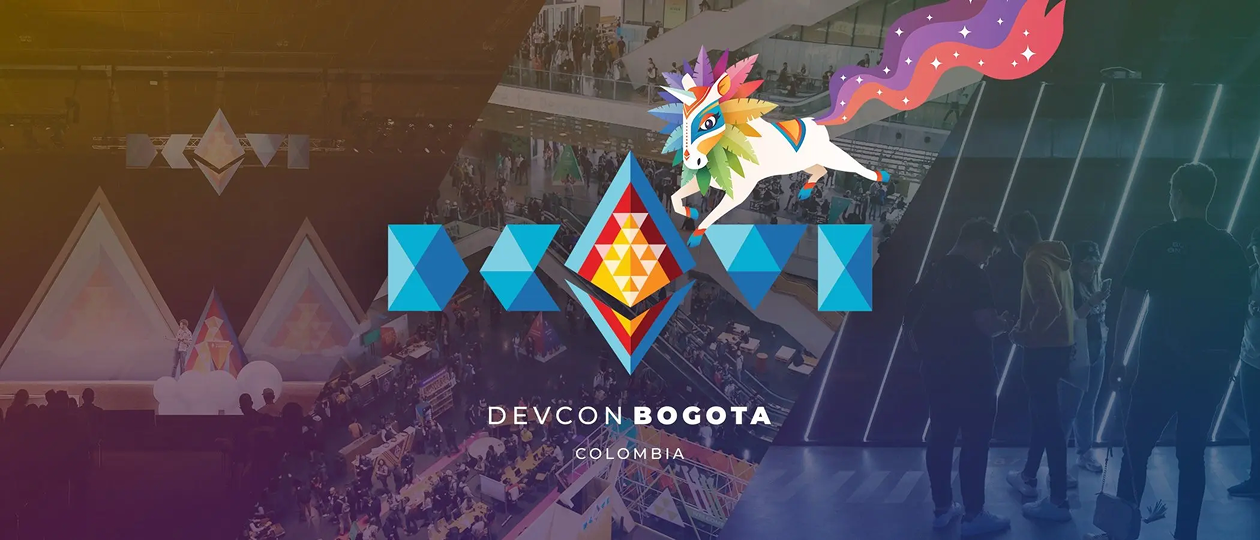
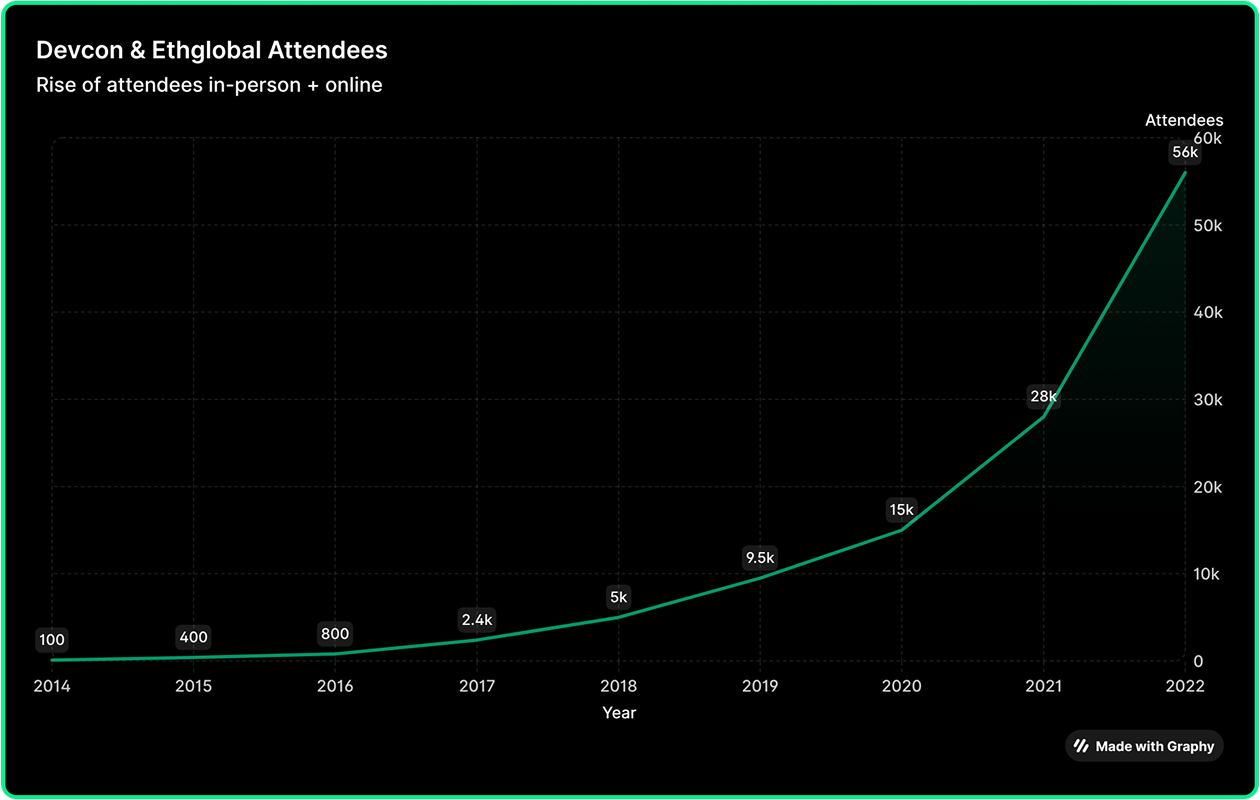
Devcon happens in different cities multiple times a year (this time in Colombia), making it difficult for many people to attend physically. Devcon was outgrowing its physical constraints. With thousands of in-person attendees and growing worldwide interest.
TLDR
- Let Devcon's web3 community watch and navigate a huge multi-track conference remotely
- Designed a live-streaming platform modeled on familiar platforms (YouTube/Twitch/Facebook Live)
- Launched successfully at Devcon Colombia, reaching 60,000+ views throughout the event
Approach
1. Prioritize live events and schedule
Users needed to connect to live content instantly. The schedule had to be front and center, showing what was happening now, what was next, and what they might be missing.
2. Allow personalization and control
With 2,000+ in-person attendees and even more online, interests would vary widely. Users needed tools to explore what mattered.
Research
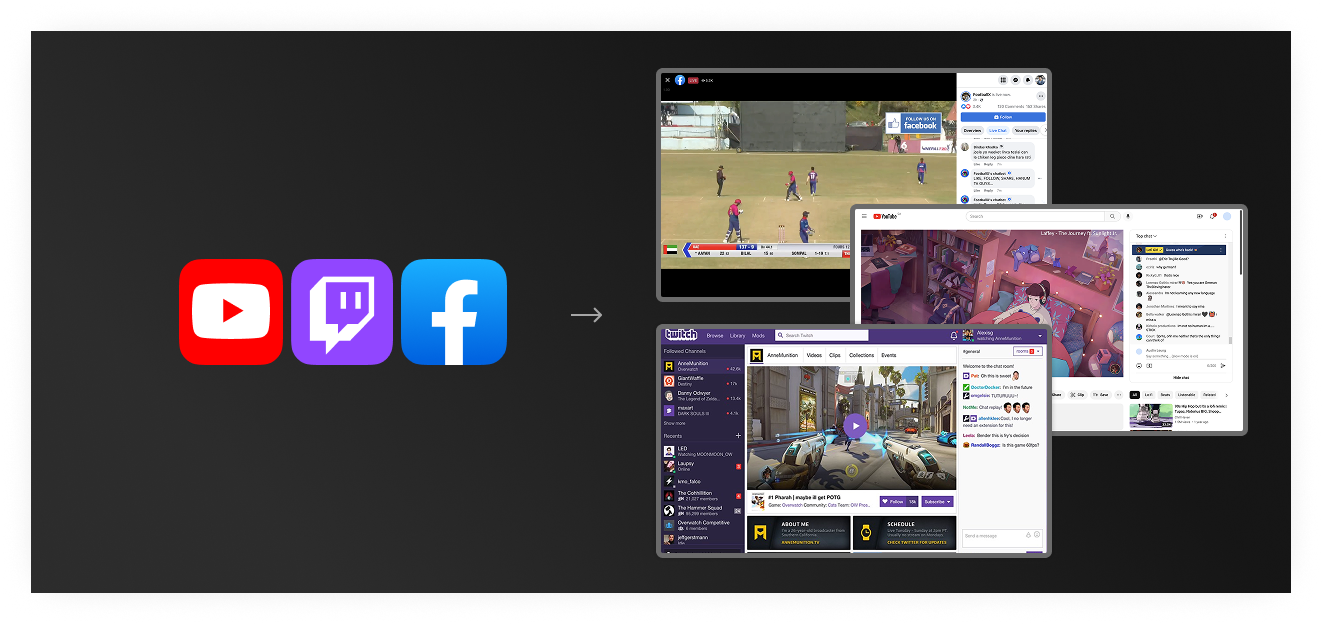
Leveraging familiar platforms.
Explored successful streaming platforms like YouTube, Twitch, Facebook live. To understand what worked and what didn't. The goal of this initial research was that attendees had probably used at least one of these platforms before. They already had mental models for how current streaming platforms work.
Familiarity was our friend as it would lower the barrier of entry. As users would be learning the platform on the spot during the live event where time is the essence.
Three types of users
Virtual attendees: Watching from anywhere in the world
In-person attendees: Wanting to catch events they missed or see what's happening elsewhere
Speakers/Organizers: Needing a reliable way to stream
Attendees expressed recurring pains
- Events overlapping meant impossible to see everything
- Nowhere to track and watch what's happening live
- Difficult to find events relevant to their interests
- Missing context about what's streaming where
Design
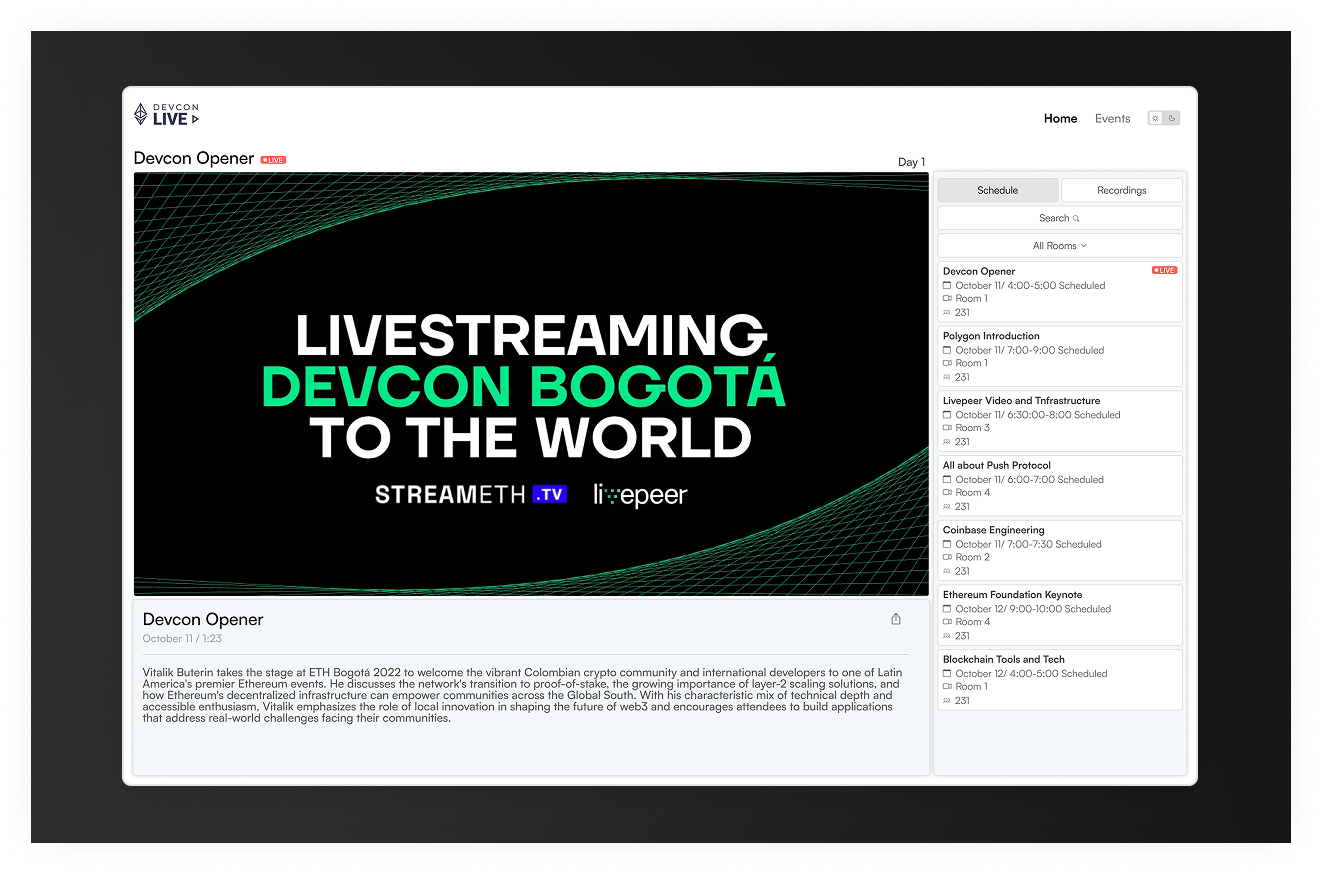
Home screen with a live focus.
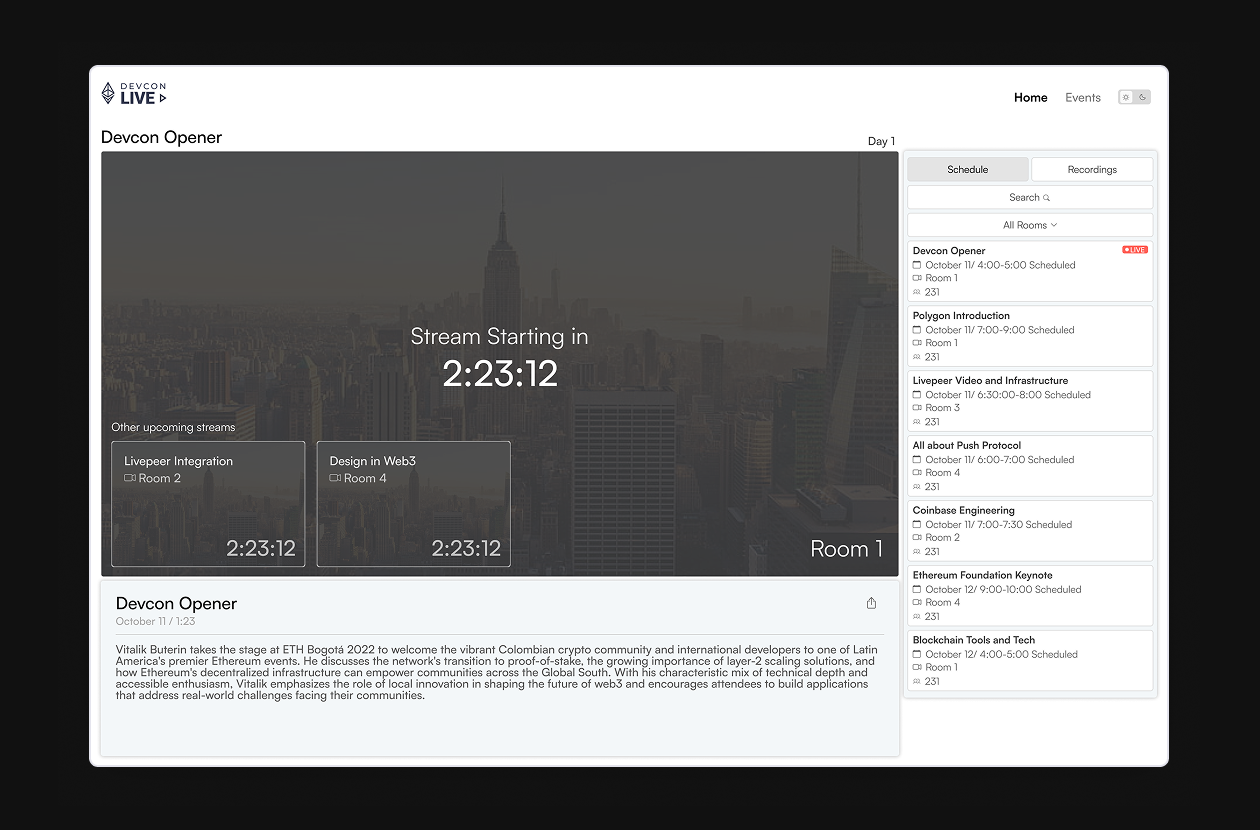
While watching one stream, users could scroll through a gallery of upcoming events in chronological order. This solved the overlapping events problem—you could plan what to watch next without leaving your current stream.
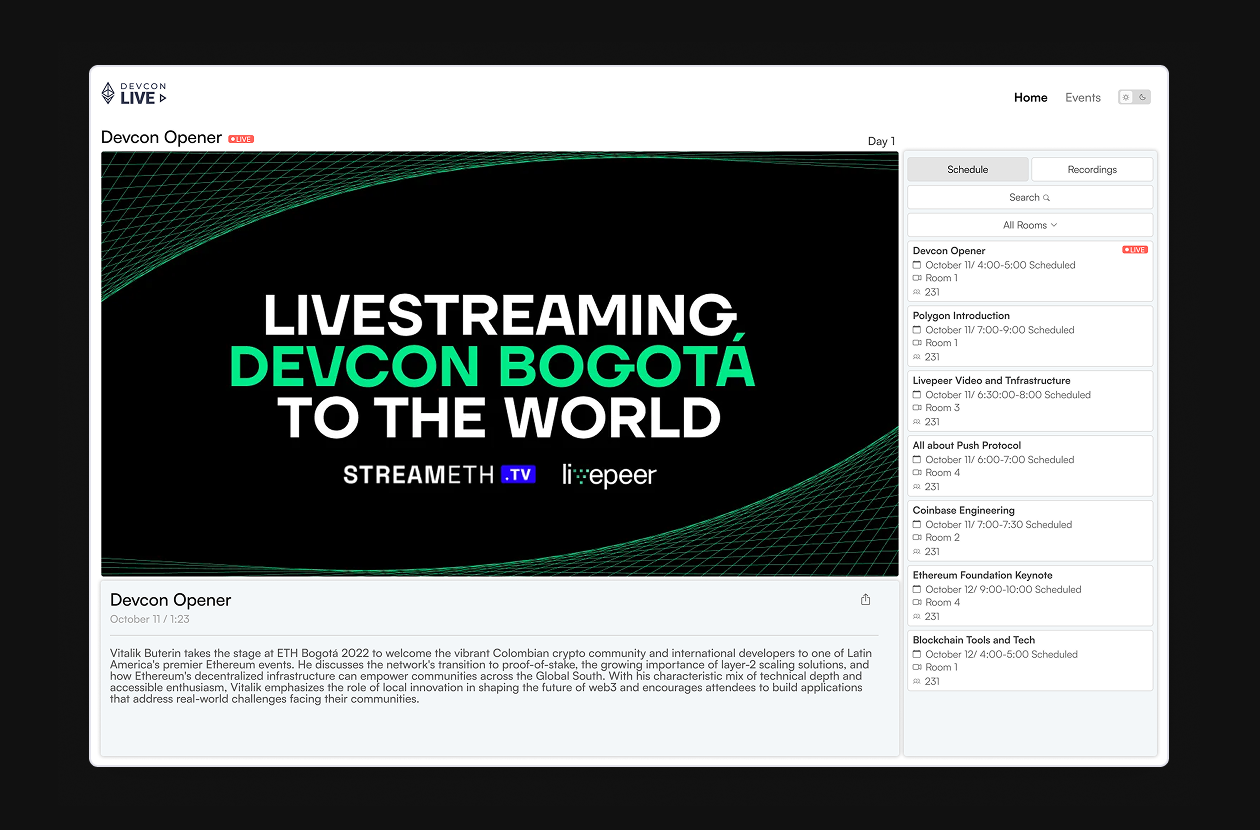
Multi view of upcoming events and throughout the day.
While watching one stream, users could scroll through a gallery of upcoming events in chronological order. This solved the overlapping events problem—you could plan what to watch next without leaving your current stream.
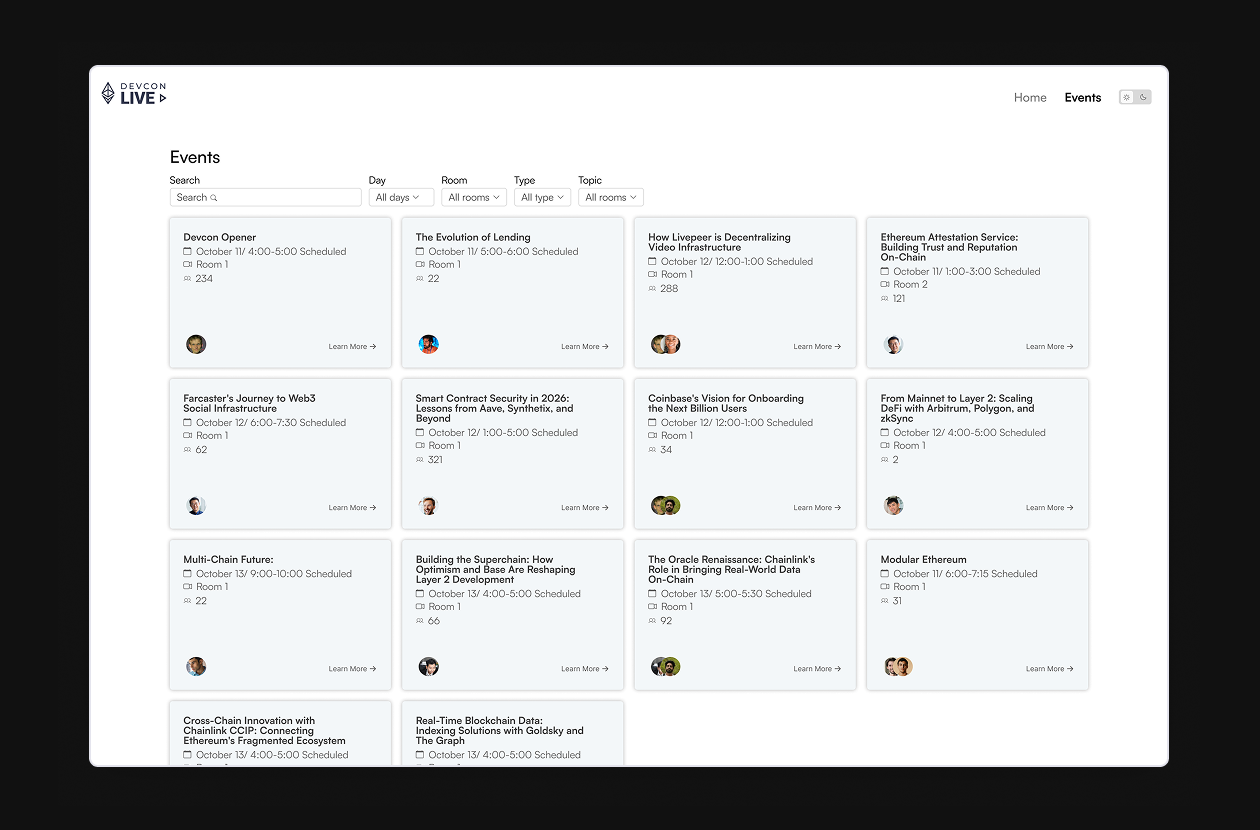
Filter system that focuses on discoverability and interests.
Option to filter the different topics, rooms and time maximized the discovery and retention of users to find what they are looking for at the event.
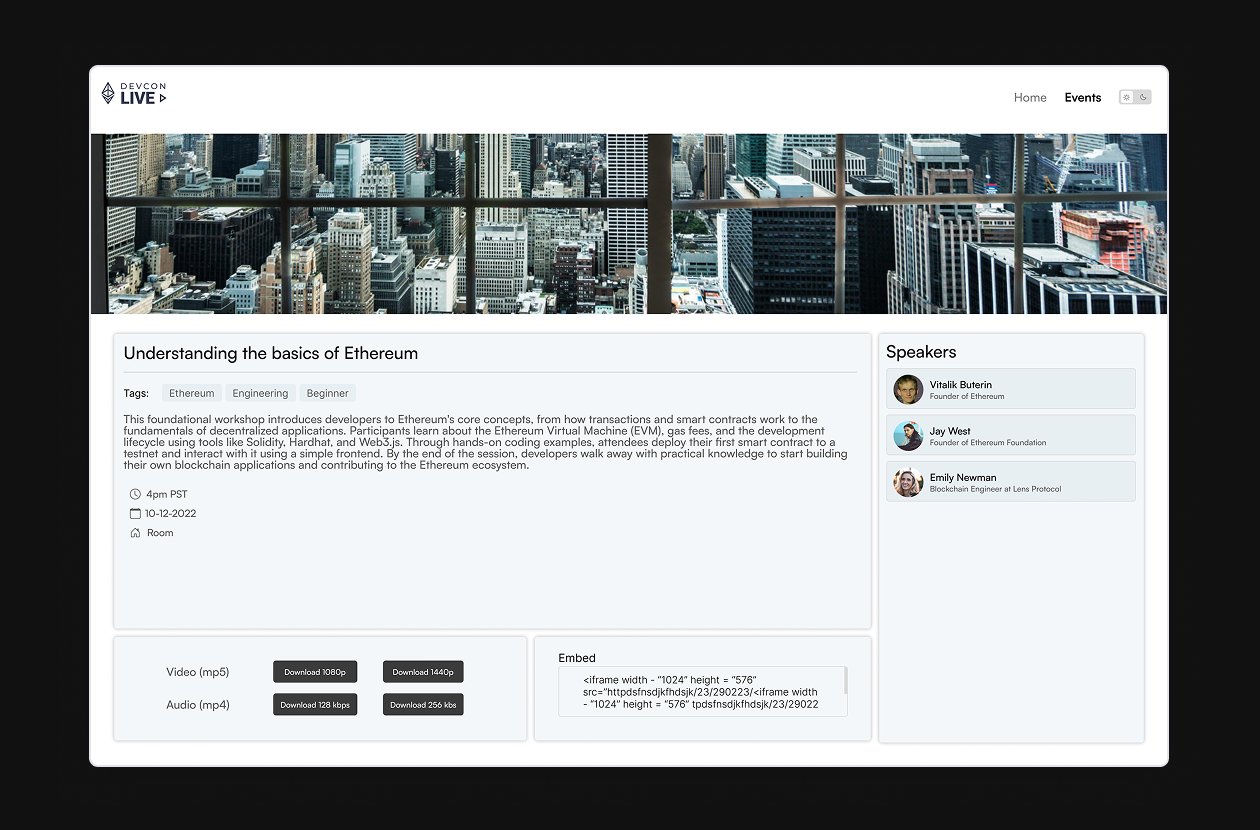
Additional details of specific events.
A page to show additional details to improve users understanding of each event.
Why this mattered
Learning a new platform during a live event is stressful. Familiar navigation and layouts meant users could jump in and start watching immediately.
Takeaways
Results
StreamETH launched successfully at Devcon in Colombia and reached 60,000+ views throughout the event. My internship ended before the event, so I didn't get to hear direct feedback, but the platform continued to grow with the foundation I built.
Takeaways
- I wanted to see this through from start to finish, but with the time constraint I learnt to focus on my specific role and to contribute to the grand scheme of the project.
- With strict time constraints and quick user onboarding required, I learnt to be flexible and adaptable to designing for the moment.
Event images