Sections
Role
Product Designer
Timeline
2023 – 2025
Team
Austin (Me)
Anson
Skills
Figma
Claude
ChatGPT
Google Suite
Background
The film industry operates across a fragmented digital landscape.
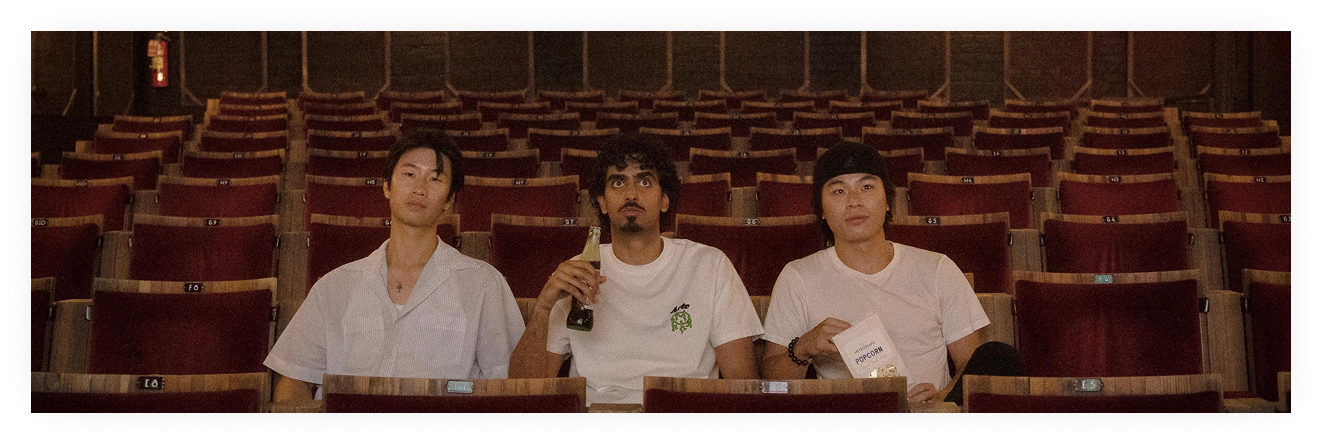
How was Direct'r born? Starting off as a passion in film, my co-founder and I noticed a gap in the film industry. Being connected to filmmakers in Vancouver, London, Paris, Hong Kong, and New York, a pattern of being spread thin across platforms was common. Our goal was to tackle this problem and build a solution for our fellow filmmakers.
TLDR
- Interviewed 20+ filmmakers across 5 cities to validate the product.
- Shipped a full MVP: Explore page, portfolio profiles, job listings, and in-app messaging.
- Reached 60+ signed up users with 50+ posted projects and jobs.
- Scaled from a 2 person founding team to a team of 5, owning design, research, and product direction end to end.
- Designed the company branding and design system.
Approach
What my role looked like
My role at Direct'r was owning everything product: design, user research, and engineering management. This meant that it was an opportunity to take my design skills beyond the usual role, wearing multiple hats.
Research
Conversations with 20+ filmmakers across different cities
With hundreds of assumptions on what to build we took a step back and focused on validating our top hypotheses. We set up conversations with 20+ filmmakers across different cities including Vancouver, London, Paris, Hong Kong and New York. Ranging from emerging filmmakers to industry professionals.
Validating our hypothesis
Building a personal brand meant creating a custom website or stitching together multiple platforms together. Finding opportunities required monitoring dozens of sources. Networking happened across multiple places. But the problem went deeper than just platform fragmentation that we continued to unveil in this journey.
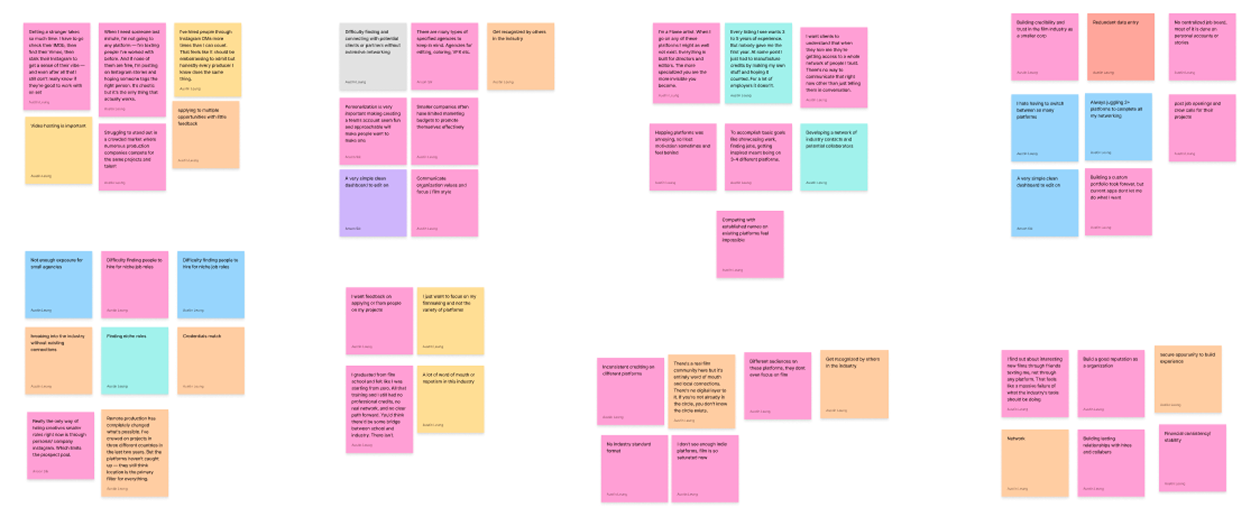
Filmmakers had a bunch of concerns!
- Filmmakers juggle multiple platforms like LinkedIn, Vimeo, YouTube, Instagram, Facebook and more for all different reasons.
- Platform hopping was exhausting. To accomplish basic goals like showcasing work, finding jobs, getting inspired meant being on 3-4 different platforms.
- Competing with established names felt impossible. On large platforms like LinkedIn or Instagram, emerging filmmakers struggled to stand out against big names with massive followings.
- Building a portfolio took too much time. Creating a custom website required technical skills or expensive tools. Stitching together profiles across platforms meant duplicating work and keeping everything updated.
- The younger film community wanted something indie. There was an appetite for a platform built specifically for them, something that felt less corporate.
Identifying the top competitors
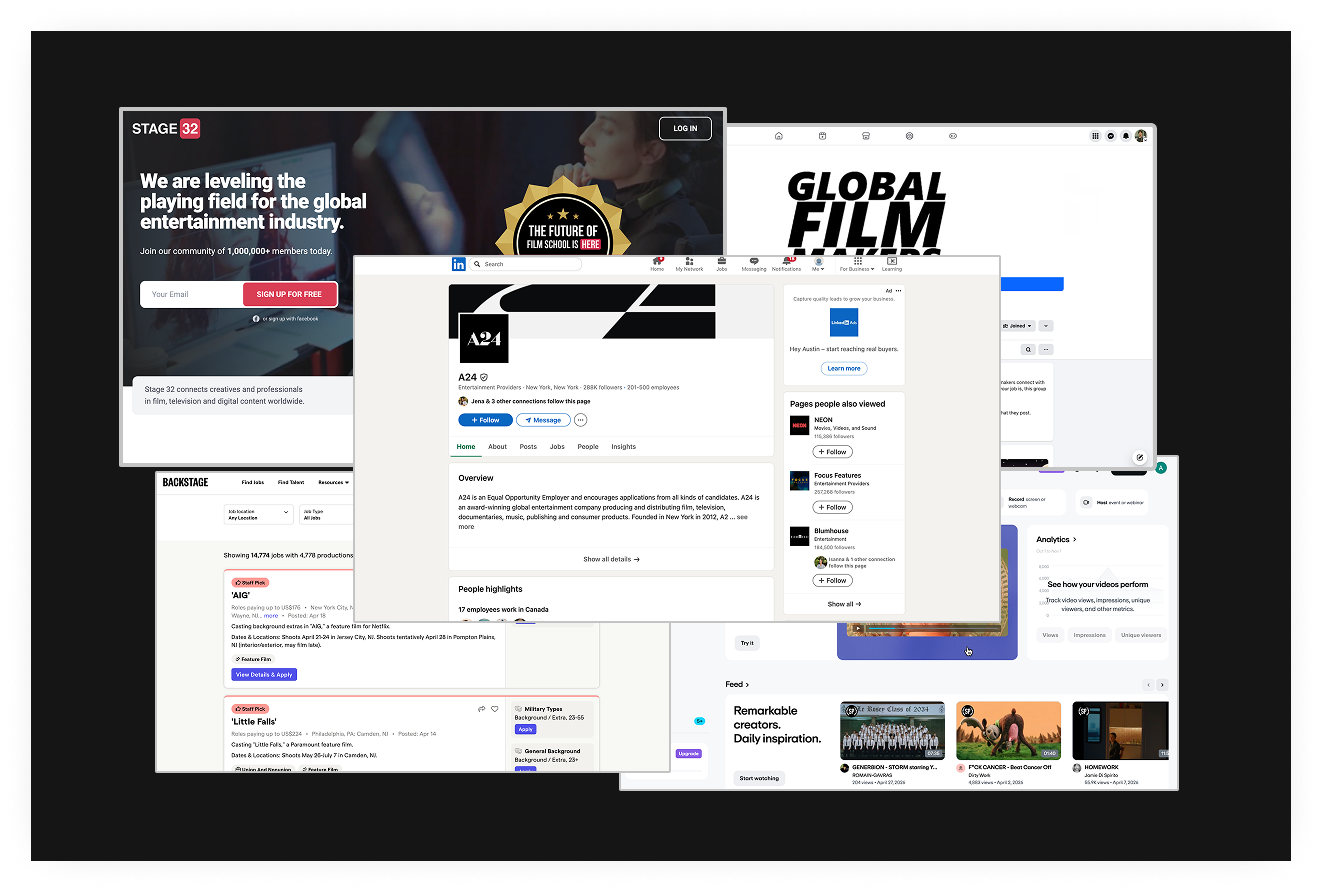
Doing a deep dive into existing competitors and picking apart what works and doesn't allowed us to find a common ground of understanding the landscape. Which prepared us for building the product itself as we understood the competition and gaps of what existed very well.
Design
Defining the MVP
Building our first iteration of the product meant following a medium of our vision and research. Balancing factors like feasibility, budget and time. I went through two stages of design that included extensive feedback and testing with the potential user before finalizing the MVP.
Users want to explore and discover
A landing page where users can explore the work and opportunities of others in the industry.
Personal Profile
A personalized portfolio for filmmakers to showcase their work, experience, and skills.
Job Opportunities
Opportunities board to find or post available positions for collaboration.
Messaging system
In-app messaging to keep users on the platform.
Some key design decisions
Some of the top decisions I made revolved around meeting users in the middle, combining my understanding of what a good product is, and building something that is scalable in the future.
Views over likes
Filmmakers didn't want to compete for popularity, but focus on equal exposure. With "views" instead of "likes" user felt seen instead of worrying about validation through likes.
Side Navigation Over Top Bar
Navigation on the side freed up the vertical space to improve the vertical experience, easier to scan content from top to bottom quickly, more space to add future features without breaking the layout, and collapsing text actions to icons creating a more visually light interface to focus on the main content.
Use of Cards
We went through multiple iterations of how we showed the landing page and displaying them in cards was the most desirable as content was grouped easily for scanning, promoted a casual modern feel and users felt more ownership of their post. The card is stripped down to what actually mattered: a large thumbnail as the work is visual, the role/project title for quick context, creator name, and view count as it promoted visibility over popularity.
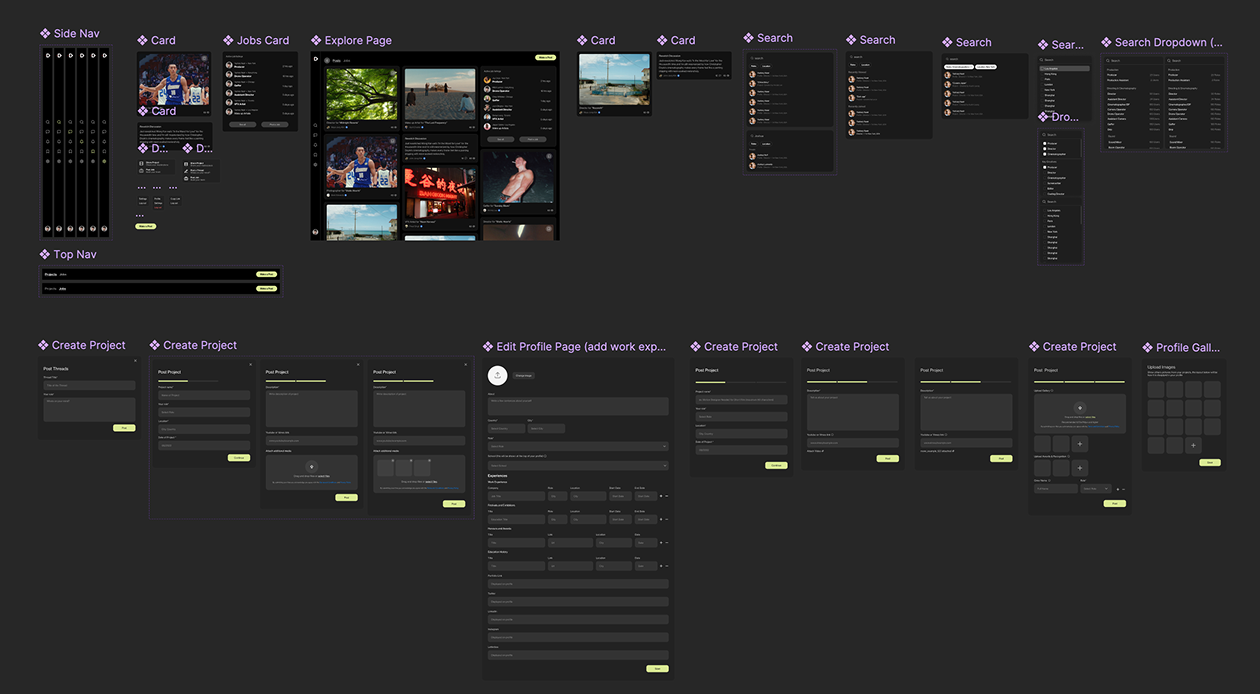
Design System
Team
Development
With such a small team it meant wearing different hats, I was required to manage and lead the designs into development. Learning about technical frameworks, timelines, and making executive product decisions.
Bridging the gap between design and development
Essentially taking on this role as the Product Manager, I learnt a lot on how I could bring this product to life from an idea to development. In this position I had to make decisions on technical frameworks, create milestones/timelines that aligned with the team's goals, lead bi-weekly syncs, run handoff reviews, handle conflicts between design and development, and understand what is feasible.
Takeaways
We failed successfully
With validation and positive feedback of our product we worked very hard to continuously improve the product in hopes to please all the users. Long story short, we realized it wasn't enough, we fell short on marketing. We had our heads down, obsessed with perfecting the product and pleasing everyone. We thought if we just made it good enough, people would come. We neglected the effort to put the product in front of more people due to chasing a perfect app.
Final Remarks
As cliche as it sounds at the end of the day all that matters to me is how much I've improved and learnt in the areas I didn't feel confident with. Taking a risk and spending hours of my time towards something that ended up not being the expected outcome was actually everything I needed to learn for my next adventure.